Our story began in 1922, when most of Fullerton’s 6,000 residents were walnut and orange farmers or Basque sheep ranchers. Oil production was thriving, and the railroad was vital to the town’s economic health. The community reflected a rich diversity of faith traditions, including Congregationalists, Roman Catholics, Baptists, German Lutherans in Anaheim, and Quakers in Whittier. Episcopalians traveled five miles to attend services at St. Michael’s in Anaheim.
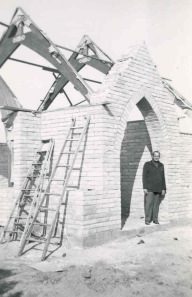
In 1917, efforts began to establish an Episcopal presence in Fullerton, culminating in the founding of St. Andrew’s Mission in 1922, with the Reverend Percy Clarkson serving as Vicar.
The cornerstone of St. Andrew’s Mission was laid on Palm Sunday in 1923. By 1926 the congregation included 139 families from all over north Orange County. These families included 478 people (406 baptized and 204 confirmed). On January 27, 1926, St. Andrew’s was admitted into union with The Episcopal Diocese of Los Angeles as a Mission.
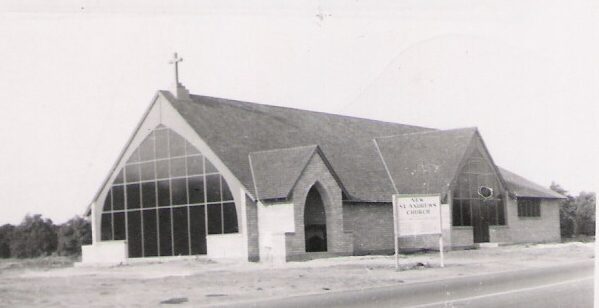
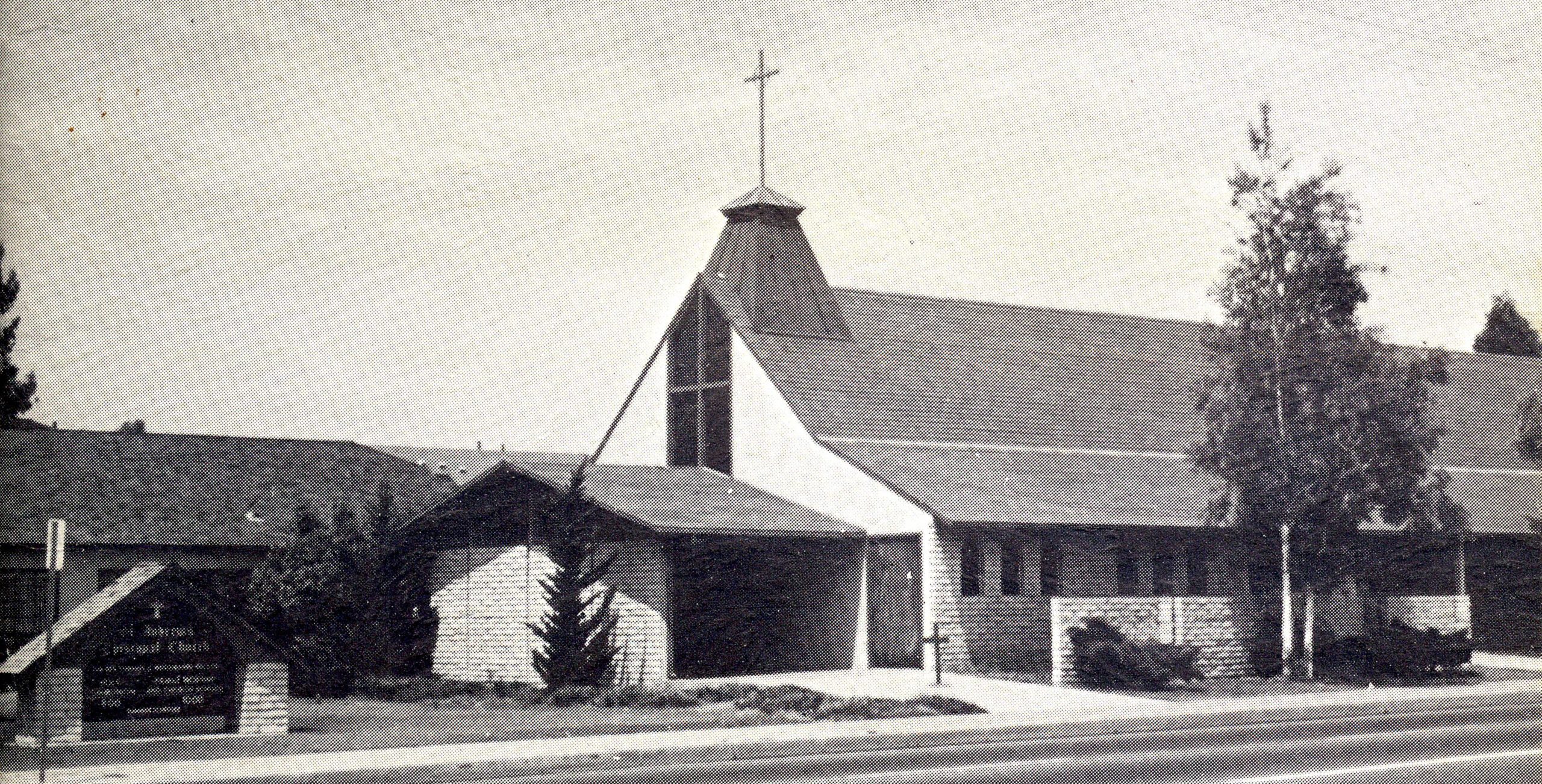
The first church building was located at 226 West Amerige in downtown Fullerton. As the congregation grew, land was purchased in 1953 at the present site on the corner of Victoria Drive and Chapman Avenue. Parish status was formally established in 1954. The new church building incorporated pews from the original sanctuary and expanded further in 1956, when additional seating, the parish hall, kitchen, and offices were completed.
During the mid-1950s, the opening of Disneyland and the growth of aerospace and other industries fueled a population boom throughout North Orange County. By the 1960s and 1970s, St. Andrew’s had grown to more than 485 households. With few Episcopal churches nearby, members of Saint Andrew’s helped establish mission congregations in surrounding communities during this period of rapid growth.
Under the leadership of Canon Shier, the parish launched a weekly soup kitchen for neighbors experiencing homelessness, began the tradition of an annual parish retreat at Camp Stevens in San Diego County, initiated free monthly community concerts, expanded outreach ministries, enhanced and maintained the campus (including Shier Plaza), and developed a highly regarded adult education program.
Today, as Saint Andrew’s continues the process of calling a new Rector, we remain a spirited, welcoming, and active parish—committed to faithful worship, meaningful outreach, and ongoing growth in Christ.
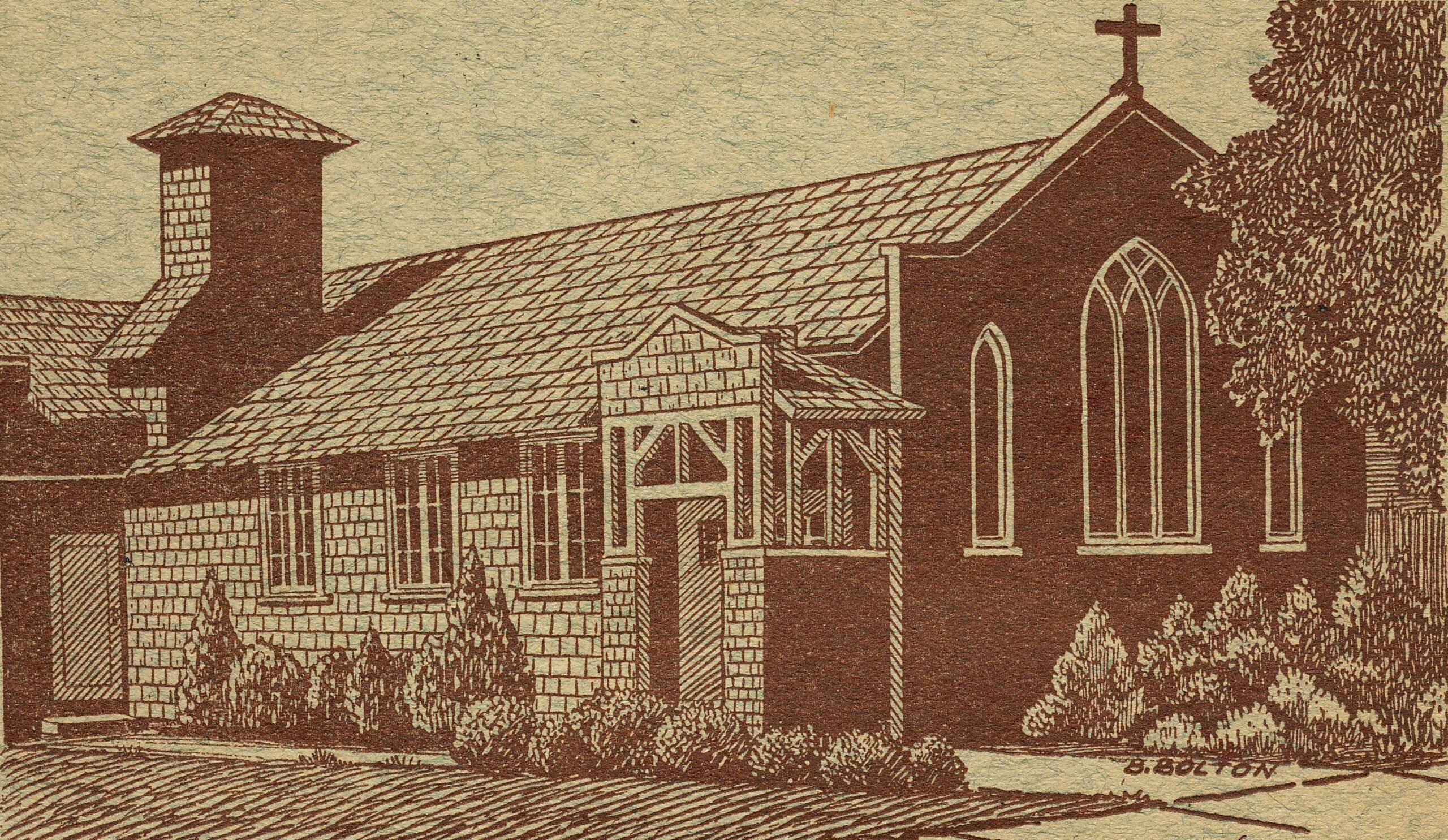
St. Andrew's Church on West Amerige in downtown Fullerton
The following clergy served as Vicars during the mission years:
· The Reverend Henry Moore (1926–1927)
· The Reverend Andrew Dexter (1927–1928)
· The Reverend Charles Maltas (1929–1935)
· The Reverend L. C. B. Hill (1935–1937)
· The Reverend Henry Softley (1937–1939)
· The Reverend William Tuttle Lewis (1939–1949)
· The Reverend Ralph Pease (1949–1950)
In 1950, The Reverend Laurence Mann was appointed Vicar and became Rector in 1954 when Saint Andrew’s achieved parish status. He served until 1956. He was followed by The Reverend Carl Smith, who served as Rector from 1957 to 1968. During that time, The Reverend John Wilcox and The Reverend Doug Vest served as Assistant Rectors.
The Reverend Charles Wiedemann served as Rector from 1968 to 1977. From 1977 through 2009, Saint Andrew’s was blessed by the long and faithful leadership of The Reverend Canon Mark Shier, who had previously served as Assistant Rector under Father Wiedemann.
The Reverend Charles Caskey served as Interim Priest from 2009 to 2010, followed by The Reverend Dr. Beth Kelly, who served as Rector from 2011 to 2022. The Reverend Bill Garrison has served as Interim Rector since 2023.
Other clergy who have served St. Andrew’s over the years as assistants or part-time clergy include: The Reverend Howard Cartwright, The Reverend Carole Snyder, The Reverend Michael Griffith, The Reverend Janet Holland, The Reverend Susan Purnell, The Reverend Daniel Suders, The Reverend Karri Backer, and The Reverend Canon John Taylor.